
"Ethiopia coffee quality"
10000 article(s) found

Overview of Ethiopian Coffee
The full name of the Federal Democratic Republic of Ethiopia (formerly known as Abyssinia) is a country located in northeast Africa. English name: The Federal Democratic Republic of Ethiopia, Ethiopia is the country of origin and hometown of coffee. Ethiopia has unique natural conditions suitable for growing all imaginable coffee.

Overview of Ethiopian Coffee
The full name of the Federal Democratic Republic of Ethiopia (formerly known as Abyssinia) is a country located in northeast Africa. English name: The Federal Democratic Republic of Ethiopia, Ethiopia is the country of origin and hometown of coffee. Ethiopia has unique natural conditions suitable for growing all imaginable coffee.

Introduction to the taste of washed coffee beans from the good quality coffee in Ethiopia.
For the exchange of professional baristas, please follow the coffee workshop (Wechat official account cafe_style) Ethiopia-Konga Cooperative Sun Bean Ethiopia Yirgacheffe Konga Coop Natural, the most outstanding batch of Ethiopia Yirgacheffe Konga Coop Natural flavor, a small producing area in the Gedeo Zone region, close to well-known cooperatives, Hafursa and Bea.

Ethiopian Coffee Fine Coffee Bean Origin Cochel / Haloba / Shaquiso / Bita Village
Professional coffee knowledge exchange more coffee bean information please follow the coffee workshop (Wechat official account cafe_style) Ethiopian coffee boutique coffee bean origin Cochel / Haloba / Shaquiso / Bita Manor flavor and taste characteristics? The birthplace of coffee is Ethiopia in the pigeon garden belt of East Africa. I accidentally pulled a very classic coffee when I went to the coffee fair.
World boutique Coffee Manor beans: Yega Snow Flavor (part two) Wild Flavor in Ethiopia
[product name]: Ethiopia Ethiopia Yirgacheffe [quality rating]: WP Grade 2 [baking]: recommended moderate baking (Medium Roast or City Roast) [grade]: excellent [granule]: ★ full [acidity]: ★★★★ slightly sour, dark chocolate aftertaste [balance]: ★★★★ is very stable

Ethiopian single bean producing area introduces how to brew Ethiopian single bean.
Professional baristas please pay attention to the coffee workshop (Wechat official account cafe_style) washed coffee accounts for 35% of exports. Good quality washed coffee is processed with freshly picked fully ripe fruit, picked carefully and closely monitored by professionals. The picked clean coffee beans are pulped on the day of picking, then fermented, washed, dried and peeled. Processed

Ethiopian coffee, culture, development
Ethiopian coffee Ethiopia has unique natural conditions and is suitable for growing all imaginable varieties of coffee. As a highland crop, Ethiopian coffee beans are mainly grown in areas between 1, 100 and 2300 meters above sea level, roughly distributed in southern Ethiopia. Deep soil, well drained soil, weakly acidic soil, laterite
Coffee beans introduce Yega Xuefei Ethiopia Sidamo Ethiopia is the origin of coffee in Africa
Ethiopia is one of the major producers of Arabica coffee in Africa, producing the best Arabian coffee in the world. It is said that coffee was first discovered by shepherds in Essekafa, and the name of coffee evolved from Kafa, so Essex is still the hometown of coffee. The geographical environment of coffee production and processing is very suitable for coffee growth. Coffee is mainly cultivated.

Ethiopian coffee beans
Ethiopia (Ethiopia) is one of the major producers of Arab coffee beans in Africa, producing the best Arab mocha beans in the world. It is said that coffee beans were first discovered by shepherds in the Kafa region of Ethiopia, and the name of coffee evolved from Kafa, so Ethiopia is still the hometown of coffee. Production and processing of coffee beans in Ethiopia

Boutique Coffee Coffee from Ethiopia (Ethiopia)
The birthplace of coffee-Ethiopia. The coffee tree originated in Ethiopia, which was originally a wild plant here, and the name coffee comes from the Ethiopian town of Kaffa. In fact, many coffee trees in Ethiopia are still wild plants, and the coffee grown on this coffee tree is full-grained and slightly alcoholic. Humans may have lived as early as the 9th century

Introduction to the method of texture treatment of Ethiopian Coffee Flavor and Grinding degree
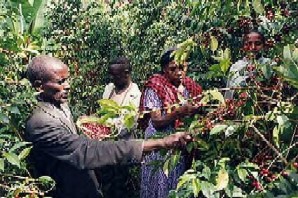
On coffee farms, high quality assurance is reflected in the timely and strict selection of mature and reddest coffee fruits. Picked coffee needs to be protected from direct sunlight, and the picked fruit is concentrated in a bamboo basket to avoid contact with the soil. The picked fruit is washed in clean water and preserved under water to improve the flavor and color of coffee beans. Processing

The birthplace of coffee, Ethiopia Solar Yega Chuefei aricha native species G1
Ethiopia (Ethiopia) is the birthplace of coffee. The coffee tree originated in Ethiopia, which was originally a wild plant here, and the name coffee comes from the Ethiopian town of Kaffa. In fact, many coffee trees in Ethiopia are still wild plants, and the coffee grown on this coffee tree is full of grains.
General situation of Ethiopia Ethiopia first China Coffee, the Top Ten Coffee producers in the World
Ethiopia is one of the major producers of Arabica coffee in Africa, producing the best Arabian coffee in the world. It is said that coffee was first discovered by shepherds in Essekafa, and the name of coffee evolved from Kafa, so Essex is still the hometown of coffee. The geographical environment of coffee production and processing is very suitable for coffee growth. Coffee is mainly cultivated.

Description of Coffee Raw Bean species and Flavor in Ethiopia; introduction to the characteristics of varieties and regions
In Ethiopia, the grading and quality control system of coffee is divided into three levels: producer, regional and national. All coffee is inspected by local inspection agencies before leaving the country of origin, and then re-tested at the coffee inspection and grading centers in Addis and Diredawa to determine its quality grade. Coffee is graded before auction and sale, for all involved in production, acquisition,

Introduction to the quality characteristics of Coffee Bean Flavor description treatment method in Cedamo Lion King
Coffee is Ethiopia's most important export cash crop and the main source of Ethiopia's foreign exchange earnings. Ethiopia's coffee exports account for about 3% of the world market, making it the eighth largest coffee exporter in the world. Coffee exports increased steadily from 58000 tons in 1990 to 110000 tons in 1995-96, and remained at this level in the following years.
Fine Coffee Recommended Yejia Sherry Mocha
Ethiopia Yirgacheffe is the home of coffee, and Ethiopia's millennia of cultivation and processing tradition have produced high-quality washed Arabica beans. Ethiopia Yirgacheffe Ethiopia Yirgacheffe Ethiopia Ethiopia Yirgacheffe Ethiopia

A brief introduction to the cultivation of Ethiopian boutique coffee beans with multi-level taste, geographical location, climate and altitude
Even the official research unit of Ethiopia does not know how many Arabica subspecies there are in Ethiopia. The coffee cooperatives in this mountain are certainly different from those planted in another mountain, and even small farmers in the same region grow different varieties of coffee. Like the little Jasper of Suzhou, although she is petite, she is gentle and delicate, sweet and lovely, and can attract ten thousand without any decoration.

A brief introduction to the Flavor, Taste and aroma characteristics of Fine Ethiopian Coffee beans
Ethiopia grows coffee in different climatic zones, so it has more than 140 farm varieties, and fresh coffee is produced all the year round. The quality of Ethiopian coffee varies according to different elevations and regional ecological environment. The Harar coffee in the southeast highland is a typical Muha coffee with a strong flavor; the coffee produced in the southwest Wollega has a rich fruity flavor; Limu coffee

Recommendation of boutique coffee manor; detailed analysis and introduction of coffee beans in Ethiopia (mocha)
Ethiopia's coffee exports account for about 3% of the world market and are the world's eighth largest coffee exporter. Coffee exports increased steadily from 58000 tons in 1990-91 to 110000 tons in 1995-96 and remained at this level in the following years. The export volume exceeded 110000 tons in 2001-2002 and reached 127000 in 2002-2003.
Ethiopian Coffee Flavor and taste introduction to the characteristics of Fine Coffee producing areas in Ethiopia Manor
In July 1991, EGF hosted a national conference with the participation of more than 20 political and ethnic organizations. The meeting adopted the Transitional Charter and elected an 87-member House of Representatives, with EGF Chairman Meles Zenawi as President of the Transitional Government and President of the House of Representatives. A transitional government was established. On May 24, 1993, Eritrea (formerly the province of Eritrea, Ethiopia) adopted